

Choosing between waterjet vs laser cutting usually comes down to one question: what are you cutting, and how thick is it? Both processes deliver clean, accurate parts, but they get there in very different ways. Picking the wrong one can cost you time, money, or a warped workpiece.
At Logan Potts, we provide waterjet cutting services for manufacturers and industrial sites across the country, so we get asked this a lot. Here’s how the two stack up.
Quick Answer
- Waterjet cutting handles almost any material (metal, stone, rubber, composites) and thicknesses up to roughly 200mm or more, with no heat distortion.
- Laser cutting is faster and more precise on thin to mid-thickness sheet metal, but struggles once the material is much thicker than 30–40mm.
- If your job involves thick plate, reflective metals (copper, brass, aluminium), or non-metal materials, waterjet is usually the better call.
- If you’re cutting thin, uniform sheet metal at volume, laser will typically get it done quicker.
What Is Waterjet Cutting?
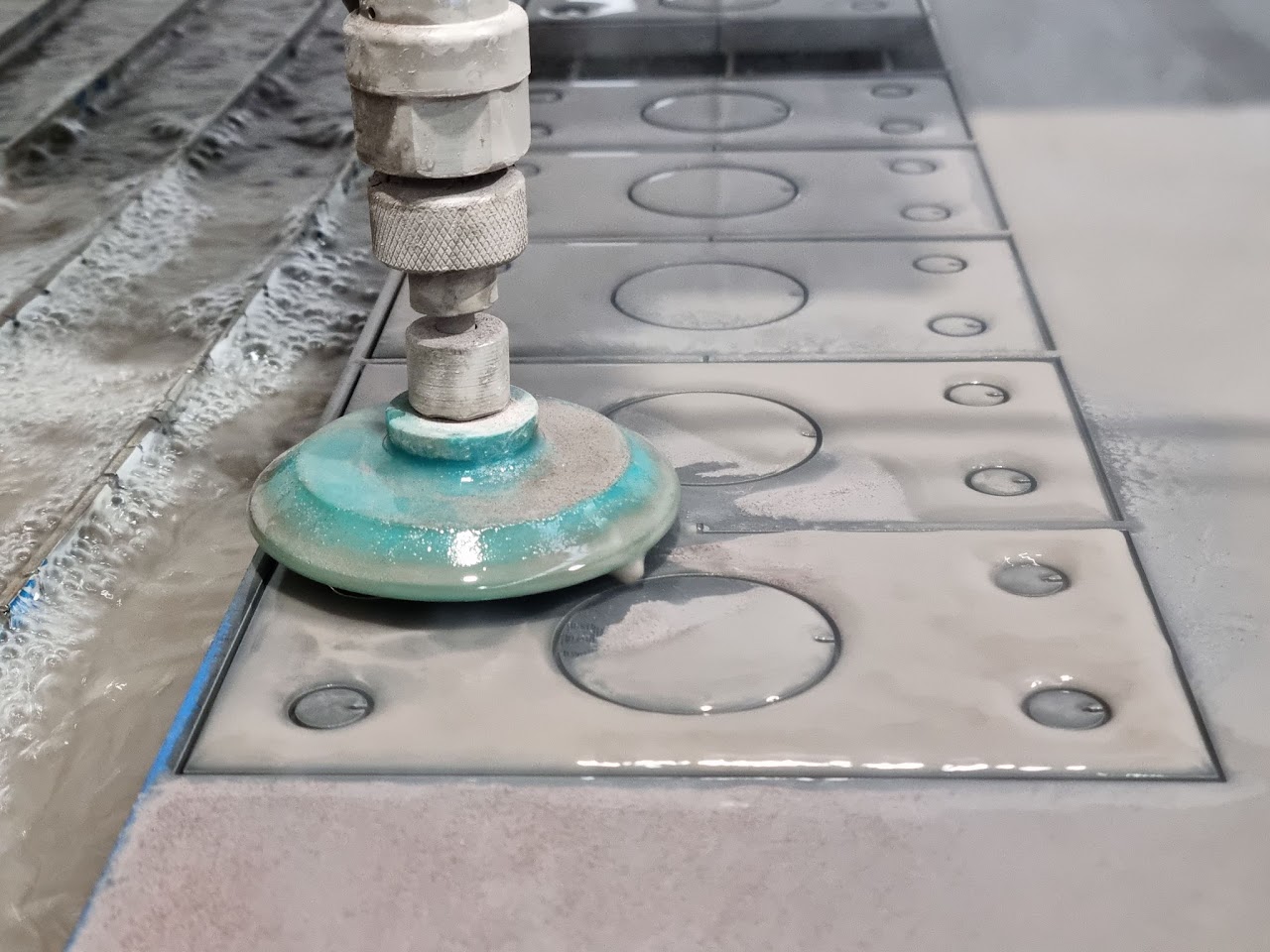
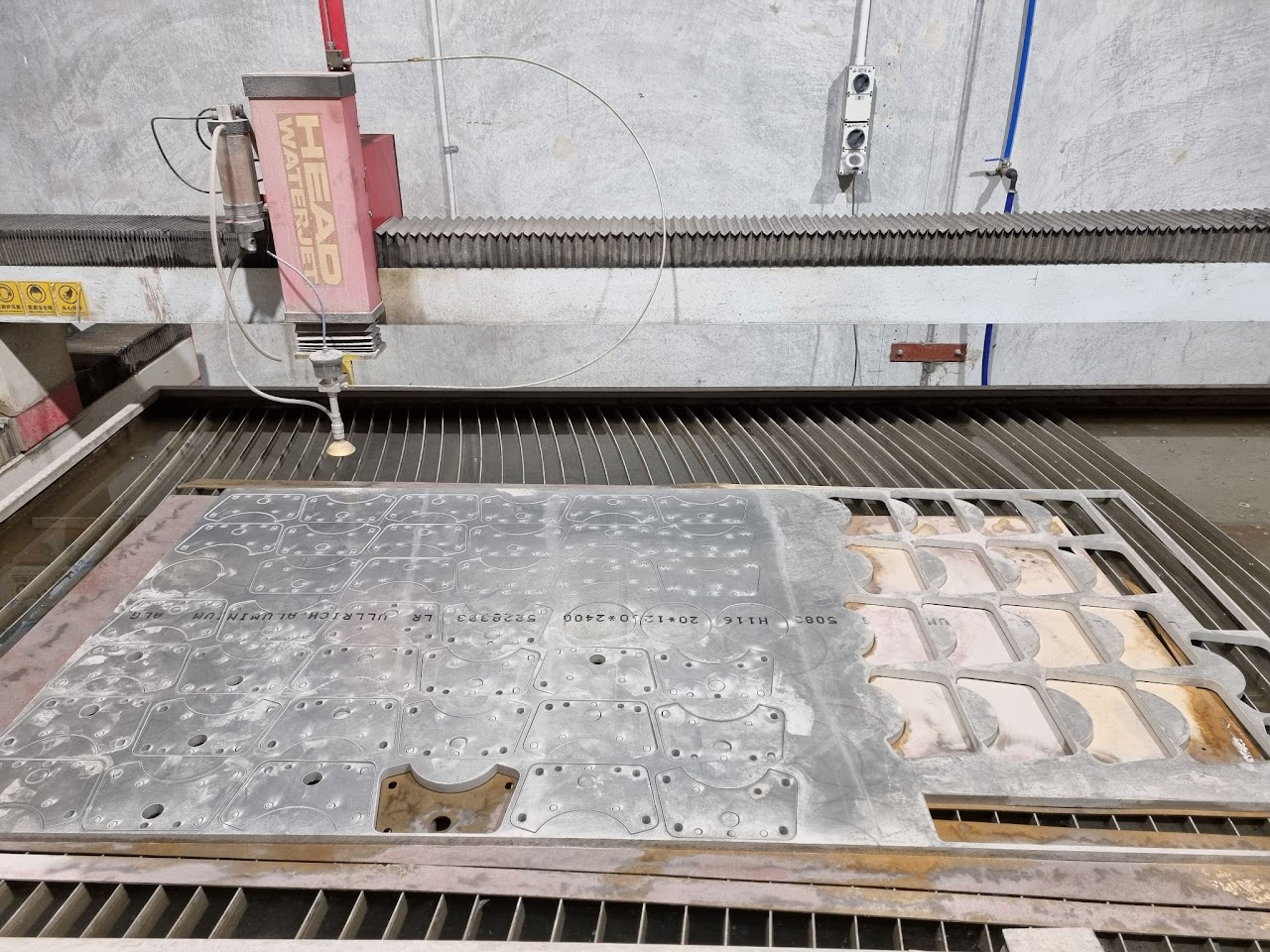
Waterjet cutting uses a high-pressure stream of water (often mixed with a fine garnet abrasive) forced through a small nozzle at pressures up to 90,000 PSI. The stream erodes its way through the material rather than melting or burning it, which is why waterjet is classed as a “cold cutting” process. There’s no heat build-up, so the material’s properties, hardness, and structural integrity stay exactly as they were before the cut.
What Is Laser Cutting?
Laser cutting uses a focused, high-powered beam of light to melt, burn, or vaporise material along the cut line, usually with an assist gas (oxygen, nitrogen, or compressed air) blowing the molten material clear of the kerf. It’s a thermal process, so the cut edge heats up briefly during cutting. On thin sheet metal, this happens fast enough that heat distortion is minimal, but it becomes more of a factor as the material gets thicker.
Waterjet vs Laser Cutting: Side-by-Side Comparison
| Factor | Waterjet Cutting | Laser Cutting |
| Materials | Nearly all – metals, stone, glass, rubber, composites, ceramics | Metals, plastics, wood; struggles with reflective metals |
| Thickness | Up to 200mm+ on some materials (high-end systems reach 250–300mm) | Generally limited to 30–40mm |
| Tolerance | Typically ±0.1–0.15mm | Tighter, often ±0.05mm or better |
| Edge quality | Clean, slightly textured; no heat-affected zone | Very smooth; can leave a thin heat-affected zone |
| Speed | Slower, especially on thick stock | Faster on thin sheet |
| Heat impact | None – cold cutting process | Localised heating at the cut edge |
What Materials Can a Waterjet Cut?
Because waterjetting is a cold process, it can handle thicknesses that most other cutting methods simply can’t, from thin shim stock to plates well over 300mm thick. As for what materials a waterjet can cut, the shortlist includes mild steel, stainless steel, aluminium, brass, copper, titanium, stone, glass, rubber, composites and ceramics. Because there’s no heat involved, there’s no warping, no hardened edges, and no risk to heat-sensitive materials.
Waterjet Cutting Thickness: How Thick Can You Go?
Waterjet cutting thickness capability is one of its biggest advantages over laser. High-pressure waterjet systems can cut through 150–200mm (6–8 inch) steel plate and beyond, whereas laser cutting is generally most cost-effective under about 30–40mm and starts to lose accuracy and speed well before that. For heavy industrial parts, brackets, or custom components cut from thick plate, waterjet is often the only practical option.
So, Which Should You Choose?
If your project needs tight tolerances on thin sheet and speed matters more than material thickness, laser cutting makes sense. But for thick plate, reflective metals, non-metals, or parts where heat distortion isn’t an option, waterjet is the stronger choice. It’s the process most industrial and engineering sites in New Zealand rely on for both one-off components and production runs.
Not sure which method suits your next job? Ourteam can review your drawings, materials, and thickness requirements, and recommend the right approach before you commit to a supplier. Get in touch with Logan Potts to discuss your next cutting project.